Table of Contents
The regional security architecture of the Middle East underwent a fundamental and irreversible shift in early 2026.
For expatriates, humanitarian workers, and Lebanese diaspora planning visits, the traditional rules of travel safety no longer apply.
Securing robust expat evacuation insurance Lebanon has transitioned from a cautious luxury to an absolute operational necessity.
At The Guardian Insurance, we specialize in navigating these complex, high-risk environments to ensure you and your family remain protected.
Many travelers mistakenly believe their standard $20 travel policy will protect them in a crisis.
This comprehensive guide exposes the dangerous gaps in retail insurance, explains the necessity of specialized War Rider buy-backs, and provides actionable steps to secure real protection in a volatile geopolitical landscape.
The Trap of Standard Travel Insurance in a War Zone
The Inescapable “Act of War” Exclusion Clause
Retail insurance companies build their business models on predictable, isolated risks like a broken leg or a lost suitcase.
They do not price standard policies to absorb the systemic risks of a theater of war.
Consequently, almost all standard policies contain an absolute “Act of War” exclusion clause.
If a conflict erupts, standard underwriters immediately void coverage for trip cancellations, medical emergencies, and property loss related directly or indirectly to the hostilities.
If you are searching for reliable travel insurance lebanon war coverage, you must abandon standard retail options entirely.
Traveling Against Government Advice
Standard travel insurance policies mandate that you follow your home government’s travel advisories.
Agencies like the U.S.
Department of State and the UK FCDO currently classify Lebanon under strict “Do Not Travel” warnings.
If you enter the country against these warnings, standard insurers automatically invalidate your entire policy.
You could slip in a hotel lobby and still face a denied medical claim simply because you traveled to a restricted “Red Zone”.
What is Expat Evacuation Insurance Lebanon?
Security Evacuation vs. Medical Evacuation (Medevac)
In the 2026 Lebanese context, you must understand the critical distinction between medical evacuation and security extraction.
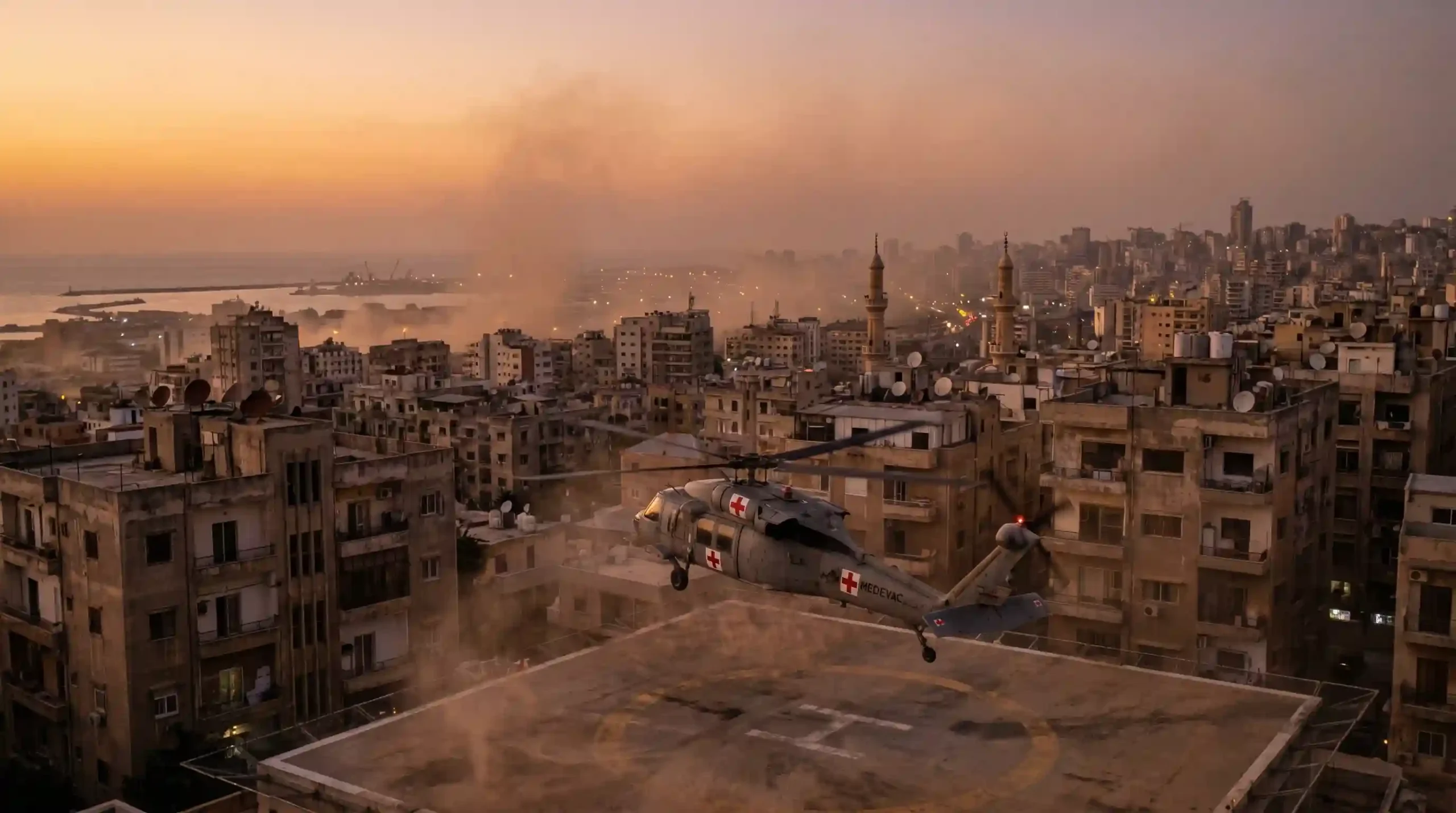
Medical evacuation (Medevac) moves a patient to the nearest center of medical excellence (like Jordan or Cyprus) when local hospitals cannot provide adequate treatment.
Security extraction, however, represents a non-medical service.
It removes individuals from imminent threats posed by active conflict, civil unrest, or terrorism.
Top-tier policies integrate both, utilizing private security teams to secure the airfield before the air ambulance even lands.
The High Cost of Uninsured Extraction
The financial implications of an emergency extraction are staggering.
Relying on out-of-pocket cash during an airspace closure can bankrupt a family.
| Service Category | Estimated Out-of-Pocket Cost (USD) | Logistical Constraints in 2026 |
|---|---|---|
| Ground Ambulance | $500-$2,500 | Highly vulnerable to fuel shortages and sudden road blockades. |
| Medical Evacuation (Air) | $100,000-$200,000+ | Requires a secure airfield and complex overflight permissions. |
| Private Security Extraction | $50,000-$500,000+ | Subject to operational viability during active conflict zones. |
The “War Rider Buy-Back” Mechanism: Specialized Coverage
Dedicated High-Risk Travel Insurance
To bridge the gap created by standard exclusions, specialized underwriters offer a “War Rider” buy-back.
This specialized feature essentially buys back the excluded perils of war and terrorism.
These policies remain fully active even when governments issue “Do Not Travel” warnings.
Crucially, they cover “Passive War” risks.
This means if you are a civilian bystander injured by collateral damage, the insurer will fully fund your emergency medical stabilization and subsequent evacuation.
Cancel For Any Reason (CFAR) and Trip Interruption (IFAR)
Because the current conflict is an ongoing “Known Event,” standard trip cancellation policies will not reimburse you if you decide to cancel your flight out of fear.
You must purchase a Cancel For Any Reason (CFAR) or Interruption For Any Reason (IFAR) add-on.
If a new wave of strikes hits the region and you decide to cut your trip short, IFAR helps reimburse your emergency commercial flight home, granting you ultimate flexibility.
How The Guardian Secures Your “War Risk” Extension
Bypassing the Direct Insurer Bottleneck
Navigating the global high-risk insurance market requires specialized local expertise.
Purchasing a policy directly online often leaves travelers confused about fine-print exclusions regarding “Active vs. Passive” participation.
As an expert broker, The Guardian Insurance evaluates your specific travel itinerary and residency status.
We partner with leading high-risk providers like Battleface, High Risk Voyager, and specialized Expat Health Insurance carriers.
The “Fresh USD” Guarantee
The Lebanese economic crisis complicates medical treatment, as top-tier hospitals demand payment exclusively in Fresh U.S.
Dollars.
We ensure that the policies we broker feature direct-billing networks capable of functioning in crisis zones, or guarantee rapid Fresh USD reimbursement.
Do not leave your safety to chance.
Contact our expert risk management team today to secure a bespoke travel and evacuation policy before you book your flight.
Frequently Asked Questions (FAQ)
Q: Is travel insurance mandatory for entry into Lebanon?
A: While immigration officials may not always demand it at the border, international agencies strongly recommend comprehensive travel insurance, specifically with emergency evacuation coverage, for all visitors entering Lebanon in 2026.
Q: How much does emergency medical evacuation typically cost from Lebanon without insurance?
A: The cost of emergency medical evacuation from Lebanon to a safe regional hub can easily exceed $100,000, making adequate high-risk insurance coverage essential to prevent catastrophic financial loss.
Q: What is the difference between medical evacuation and medical repatriation?
A: Medical evacuation provides urgent transport to the nearest appropriate medical facility capable of treating your condition.
Medical repatriation transports you back to your home country for ongoing long-term care or recovery.
Q: Which international insurance providers offer expat health plans in Lebanon?
A: Recognized international providers offering robust expat health insurance in Lebanon include Cigna Global, Allianz Care, Bupa Global, and specialized high-risk underwriters like Battleface.
Q: Do travel insurance plans for Lebanon cover COVID-19 related illness?
A: Yes, many comprehensive international travel medical plans treat COVID-19 like any other new sickness or injury, explicitly covering diagnosis and inpatient treatment if you contract the virus during your trip.
Q: Can I purchase coverage for pre-existing conditions when traveling to Lebanon?
A: Yes, certain high-end travel medical plans offer coverage for the “acute onset” of pre-existing conditions, though insurers apply strict eligibility limits based on your age and medical history.
Q: What is the maximum duration I can be covered by a travel medical policy for Lebanon?
A: Short-term travel medical insurance policies can cover trips lasting from five days up to a full year.
For stays exceeding one year, you must transition to a dedicated Expatriate Health Insurance policy.
Q: What is the primary risk expats face regarding public healthcare in Lebanon?
A: Expatriates face severe risks because the public healthcare system (NSSF) is heavily strained and underfunded.
Foreign residents must secure private, Fresh USD-denominated insurance to access reliable private hospitals.