Table of Contents
اقرأ هذا الدليل بالعربية / Read this guide in Arabic
If you have just had an accident on a Lebanese road, the next few hours largely decide whether your claim pays out smoothly or drags on for months. This guide lays out the exact sequence, from the police report to the surveyor’s inspection and the final settlement, the way we have handled it for clients at The Guardian for more than twenty years as licensed insurance brokers in Lebanon.
Quick Answer: The 7 Steps to File Your Claim
- Secure the scene and check for injuries; call the Red Cross on 140 if anyone is hurt.
- Call the police on 112 and wait for the official accident report.
- Document everything before leaving: photos, plates, the other driver’s license and insurance details.
- Notify your insurer or broker immediately, within the notification window set in your policy.
- Meet the surveyor, the khabir appointed by the insurer to assess the damage.
- Submit the complete claim file with every supporting document attached.
- Repair and settle, through the approved garage network or your own garage.
Each of these steps carries details that make or break claims in practice, so here is how to handle every one of them properly.
Step-by-Step: Filing Your Car Insurance Claim in Lebanon
Step 1: Secure the Scene and Check for Injuries
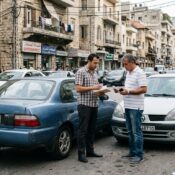
Turn on your hazard lights and, if the cars can still move and nobody is hurt, pull them out of the traffic lane. If anyone is injured, do not move the vehicles at all; call the Lebanese Red Cross on 140 and wait for help to arrive. Your safety and the safety of everyone involved come before any paperwork, and a calm, controlled scene also makes the photos and the police report far easier to complete correctly.
Step 2: Call the Police and Get the Accident Report
Call the Internal Security Forces on 112 and ask for an officer to attend the scene. The official accident report, the mahdar, is the document that proves the incident happened, when, where, and between whom. Insurers in Lebanon expect it attached to the claim, especially when another vehicle, an injury, or significant damage is involved, and claims regularly collapse without it. Wait for the officer, give a factual account, and keep the report reference before you leave.
Step 3: Document Everything Before Leaving
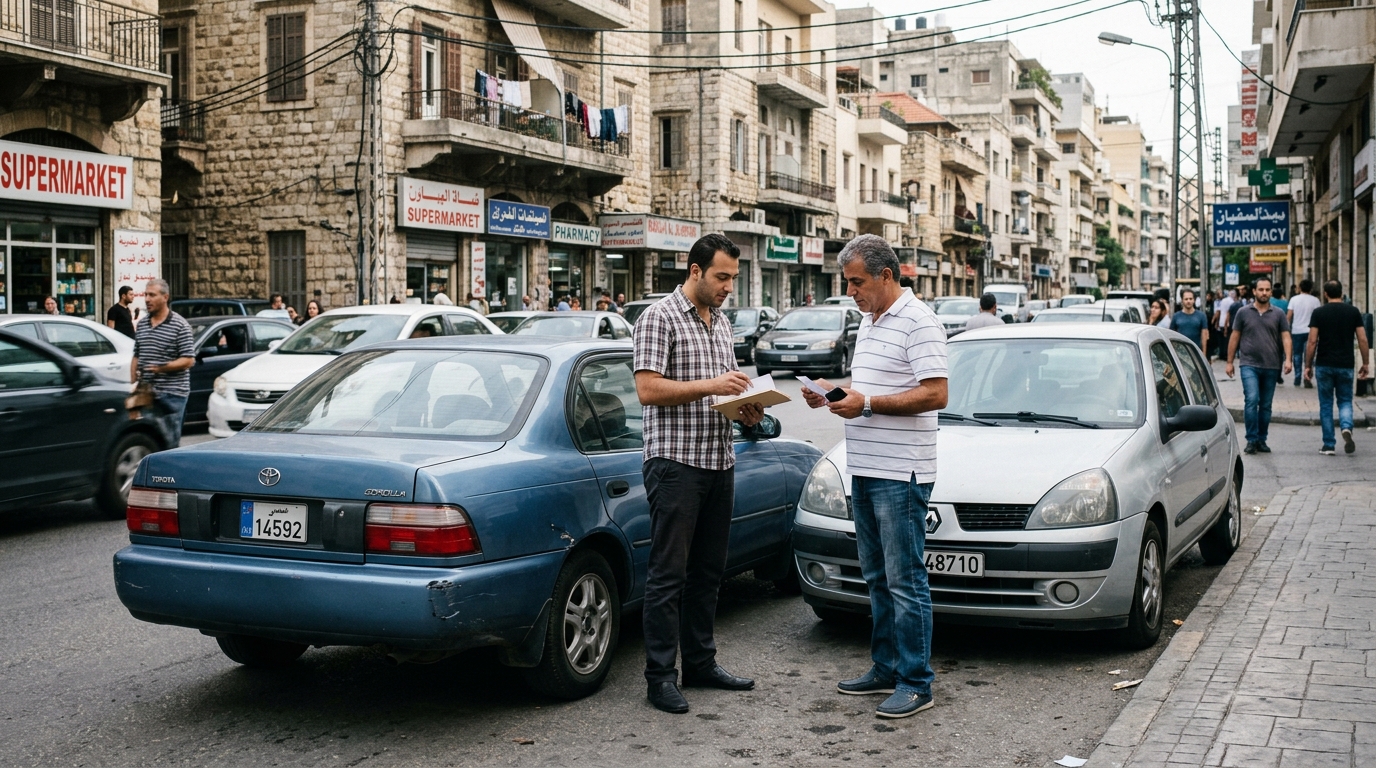
Photograph both cars from several angles, the plates, the position of the vehicles on the road, and any skid marks or traffic signs. Take the other driver’s full name, license number, phone, and insurance details, and collect contact details from any witnesses who stopped. Never sign a waiver at the roadside and never accept a quick cash offer to walk away; you cannot judge the real repair cost standing next to a dented bumper, and a signature given in the moment can lock you out of a proper claim later.
Step 4: Notify Your Insurer or Broker Immediately
Most Lebanese policies set a notification window of only a few days, so call your insurer’s hotline or your broker the same day if possible. Give the essentials: your policy number, the time and place, a factual account, and the police report reference. If The Guardian arranged your policy, a single call opens the file, and you can track your claim online from that moment onward. Early notification also gets the surveyor booked sooner, which shortens the entire settlement timeline.
Step 5: The Surveyor (Expert) Inspection
The insurer appoints a licensed surveyor, known locally as the khabir, to inspect the vehicle and estimate the repair cost. Keep the damage untouched until this inspection, make the car accessible in good light, and hand over copies of your photos and the police report. The surveyor’s report sets the approved repair amount, so walk them through everything you documented at the scene rather than assuming they will piece it together on their own.
Step 6: Submit the Complete Claim File
A complete file on first submission is the single biggest factor in a faster settlement. Gather every item below before you send anything:
| Document | Notes |
|---|---|
| Completed claim form | Provided by your insurer or broker |
| Police accident report | Obtained at the scene via 112 |
| Policy number and schedule | Check the notification window while you have it open |
| National ID | Copy for the claim file |
| Driving license | Must have been valid on the accident date |
| Vehicle registration | With valid mecanique |
| Photos of the damage and scene | Taken before the vehicles were moved, where possible |
| Other driver’s details and insurer | Name, license, phone, insurance company |
| Receipts | Towing, repairs, and medical costs where relevant |
Step 7: Repairs and Settlement
Using the insurer’s approved garage network normally means a cashless repair, with only the deductible settled at the garage. Choosing your own garage usually means paying upfront and claiming reimbursement against the surveyor’s approved estimate, so confirm that figure before authorizing any work. Ask how the payout will be made as well; many policies in today’s market are issued and settled in fresh dollars, and clarifying the payment terms before repairs begin prevents arguments after they end.
Third-Party vs Comprehensive: How Your Claim Path Differs
Compulsory motor insurance in Lebanon covers bodily injury you cause to third parties, and it pays nothing toward your own vehicle’s repairs. Which policy you hold therefore determines who you claim against and how the file moves.
| Aspect | Compulsory third-party | Comprehensive |
|---|---|---|
| What it covers | Bodily injury you cause to third parties | Your own car’s damage plus the liability covers in your schedule |
| Your own car’s repairs | Not covered; claim against the at-fault driver’s insurer | Claimed under your own policy |
| Who handles recovery | You pursue the at-fault party, ideally with a broker’s help | Your insurer pays you, then pursues the at-fault party |
| Police report | Essential to establish fault and identity | Still expected by the insurer with the claim file |
If you only carry the compulsory cover, your car’s own damage rides entirely on proving the other driver’s fault. Our motor insurance in Lebanon page explains the cover levels in detail, and if you are weighing the upgrade, our breakdown of car insurance prices in Lebanon shows what the move actually costs.
War, Riots, and Political Violence Damage: Is It Covered?
Standard Lebanese motor policies exclude war and political violence, and roughly 95 percent of policies in the market carry that exclusion. Optional political violence or SRCC extensions, covering strikes, riots, and civil commotion, can be added to comprehensive cover, and given what Lebanese drivers have lived through since 2024, that conversation is worth having before renewal rather than after a loss. If your car is damaged in such an event, document everything exactly as you would for any accident: under Article 969 of the Code of Obligations and Contracts, the burden of proving that the excluded peril actually caused your loss sits with the insurer, not with you. For the full picture of what can and cannot be protected, read our guide to war risk insurance in Lebanon in 2026.
Claim Denied or Delayed? Your Escalation Options
Start with a written escalation to the insurer itself, referencing your claim number and the surveyor’s report. If that goes nowhere, Lebanon offers a free path most drivers have never heard of. The Insurance Control Commission accepts complaints through its ICC Care office and mediates between policyholders and insurers. Cases that remain unresolved can be referred to the Insurance Arbitration Council, a specialized body with a dedicated vehicle-accident chamber; it is exempt from judicial fees, requires no lawyer, and hears claims under LBP 75 million. Keep one deadline in view throughout: any action arising from an insurance policy prescribes two years from the event under Article 985 of the Code of Obligations and Contracts, so never let a rejected claim sit while the clock runs.
Why Filing Through a Broker Changes the Outcome
A broker’s job during a claim goes well beyond forwarding your phone call. At The Guardian we prepare the file so it is complete on first submission, chase the surveyor’s appointment, push the settlement through the insurer’s internal stages, and advise you before you sign any waiver or discharge. After more than twenty years handling claims in this market, we can say the difference shows most on the difficult files: disputed fault, uninsured drivers, war-related damage, and settlements that stall without a professional applying steady pressure on your behalf.
Frequently Asked Questions
How long do I have to file a car insurance claim in Lebanon?
Notify your insurer as soon as possible; most Lebanese policies set a notification window of a few days, so check your policy schedule. Legally, any action arising from an insurance policy prescribes two years from the event under Article 985 of the Code of Obligations and Contracts, so never sit on a claim.
Do I need a police report to file a car insurance claim in Lebanon?
Yes, in practice. Insurers in Lebanon expect an official accident report attached to the claim, especially when another vehicle, an injury, or significant damage is involved. Call the ISF on 112 from the scene, wait for the officer, and keep a copy of the report reference before leaving.
What documents do I need to submit with my claim?
A completed claim form, the police accident report, your policy number, national ID, driving license, vehicle registration, clear photos of the damage and scene, the other driver’s details and insurer, plus receipts for towing or repairs. A complete file on first submission is the single biggest factor in faster settlement.
Does compulsory third-party insurance cover damage to my own car?
No. Compulsory motor insurance in Lebanon covers bodily injury you cause to third parties. It pays nothing for your own vehicle’s repairs. To claim for your own car’s damage, whatever the cause, you need comprehensive or an own-damage cover, or you claim against the at-fault driver’s insurer.
Is war or political violence damage covered?
Standard Lebanese motor policies exclude war and political violence, and most insurers apply that exclusion strictly. Optional political violence or SRCC extensions can be added to comprehensive cover. If damage occurs, document everything anyway: the insurer carries the burden of proving the excluded peril actually caused your loss.
What if the other driver has no insurance?
Get the police report regardless: it establishes fault and identity. If you hold comprehensive cover, claim under your own policy and let your insurer pursue recovery. If you only carry compulsory cover, your route is a direct claim against the driver, where the report and a broker’s guidance matter most.
What can I do if my claim is rejected or delayed?
First escalate in writing to the insurer. If that fails, file a complaint with the Insurance Control Commission, which mediates disputes. Unresolved cases go to the Insurance Arbitration Council, a specialized body with a vehicle-accident chamber that is exempt from court fees and does not require a lawyer.
Can I choose my own garage for repairs?
Usually yes, but it changes how you are paid. Using your insurer’s approved network typically means cashless repair with the deductible settled at the garage. Choosing your own garage usually means paying upfront and claiming reimbursement against the surveyor’s approved estimate, so confirm the amount before authorizing work.
If you want cover that actually performs on the day you need it, talk to us before the next renewal. Request a free quote online or call us on +961 81 535 355, and one of our advisors will walk you through your options in minutes.